Zero friction HTTP framework
for Node.js
Tweaked for high throughput, low overhead, and maximum flexibility.



Why 0http?
Blazing Fast
One of the fastest Node.js web frameworks. Optimized for speed with smart caching and efficient routing.
Highly Configurable
Swap routers, servers, and customize behavior to fit your needs. You are in control.
Middleware Support
Express-like middleware chain with full async/await support for modern development.
TypeScript Ready
First-class TypeScript support for type-safe development out of the box.
Nested Routing
Powerful nested router support for modular architectures, optimized for static paths.
Production Ready
Secure defaults with environment-aware error handling. Built for the real world.
Core Capabilities
1. Pluggable Routers
0http allows you to define the router implementation you prefer.
Sequential Router (Default)
An extended implementation of trouter.
- Features: Middleware support, nested routers, regex matching.
- Performance: Uses an internal LRU cache (optional) to store matching results, making it extremely fast even with many routes.
- Supported Verbs: GET, HEAD, PATCH, OPTIONS, CONNECT, DELETE, TRACE, POST, PUT
Find-My-Way Router
Integration with find-my-way, a super-fast Radix Tree router.
- Best for: Static paths and high performance without regex overhead.
- Note: Does not support all the middleware goodies of the sequential router.
2. Middleware Engine
The middleware engine is optimized for performance and flexibility.
- Global & Route Middleware: Define middleware globally or for specific routes.
- Async/Await Support: Fully supports async middlewares for clean code.
3. Nested Routers
Organize your application with modular nested routers. 0http optimizes static nested routes for better performance.
4. Custom Servers
0http is server-agnostic. You can use the standard Node.js http.Server,
https.Server, or even custom implementations.
Configuration Options
Pass a configuration object to zero(config):
| Option | Description | Default |
|---|---|---|
router |
Custom router instance. | sequential() |
server |
Custom server instance. | http.createServer() |
defaultRoute |
Handler for 404 Not Found. | (req, res) => { res.statusCode = 404; res.end() } |
errorHandler |
Global error handler. | Production-safe error handler. |
prioRequestsProcessing |
Use setImmediate to prioritize request processing. |
true |
Sequential Router Options
| Option | Description | Default |
|---|---|---|
cacheSize |
LRU cache size. 0 to disable, <0 for unlimited. |
-1 (Unlimited) |
Installation
Quick Start
Get started with 0http in seconds. Choose your use case below.
Basic Server
const zero = require('0http')
const { router, server } = zero()

router.get('/hello', (req, res) => {
  res.end('Hello World!')
})

server.listen(3000)
JSON API
router.get('/api/users', (req, res) => {
  res.setHeader('Content-Type', 'application/json')
  res.end(JSON.stringify({
    users: [
      { id: 1, name: 'Alice' },
      { id: 2, name: 'Bob' }
    ]
  }))
})
Middleware Chain
// Global middleware
router.use((req, res, next) => {
  console.log(`${req.method} ${req.url}`)
  return next()
})

// Route middleware
router.get('/protected', auth, handler)
Async/Await Support
router.get('/users/:id', async (req, res) => {
  try {
    const user = await db.findUser(req.params.id)
    res.setHeader('Content-Type', 'application/json')
    res.end(JSON.stringify(user))
  } catch (err) {
    res.statusCode = 404
    res.end('User not found')
  }
})
Nested Routers
const apiRouter = zero().router

apiRouter.get('/users', getUsers)
apiRouter.post('/users', createUser)

// Mount nested router
router.use('/api', apiRouter)

// Routes: /api/users
Error Handling
const { router, server } = zero({
  errorHandler: (err, req, res) => {
    console.error(err)
    res.statusCode = 500
    res.end('Internal Server Error')
  }
})

router.get('/error', () => {
  throw new Error('Oops!')
})
Query Parameters
router.get('/search', (req, res) => {
  // Query params available in req.query
  const { q, page, limit } = req.query

  res.setHeader('Content-Type', 'application/json')
  res.end(JSON.stringify({
    term: q,
    page: page || 1,
    limit: limit || 10
  }))
})

// GET /search?q=node&page=2&limit=20
Custom Router
const fmw = require('find-my-way')()

const { server } = zero({
  router: (req, res) => {
    fmw.lookup(req, res)
  }
})

fmw.on('GET', '/fast', (req, res) => {
  res.end('Radix tree routing!')
})
Streaming Response
router.get('/stream', (req, res) => {
  res.setHeader('Content-Type', 'text/plain; charset=utf-8')

  let i = 0
  const interval = setInterval(() => {
    i++
    res.write(`chunk ${i}\n`)

    if (i === 5) {
      clearInterval(interval)
      res.end('done')
    }
  }, 500)
})
Benchmarks
0http is designed for extreme performance.
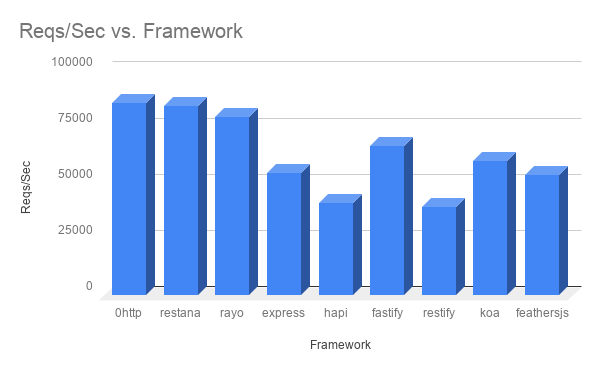
Snapshot (MacBook Pro i9, Node v12)
- 0http (sequential): ~88k req/sec
- 0http (find-my-way): ~87k req/sec
- restana: ~73k req/sec
Check the latest independent results: Web Frameworks Benchmark